Zoho CRM8 min read
How Zoho CRM Streamlines Your Sales Process
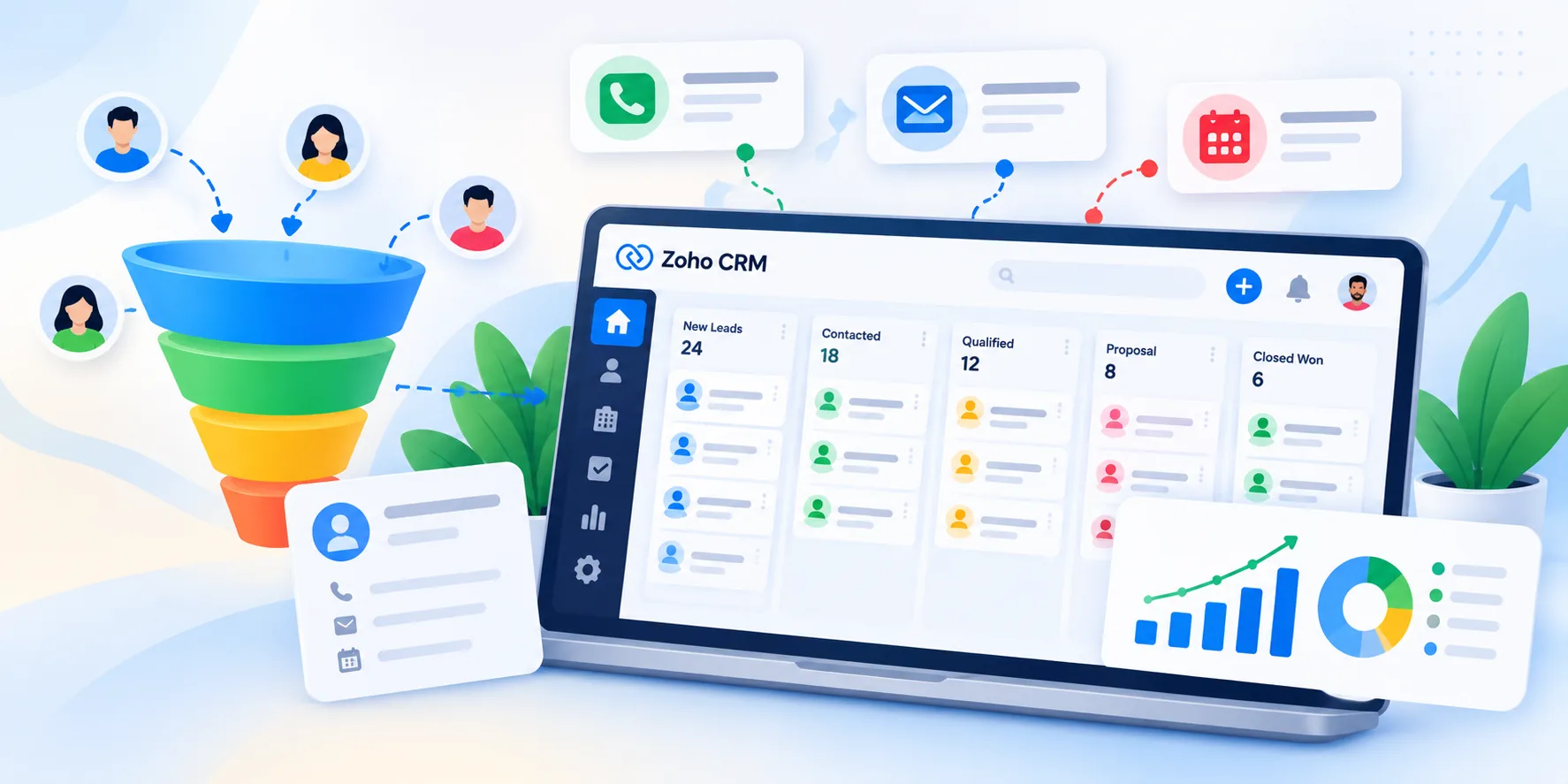
Discover how Zoho CRM helps businesses organise leads, manage sales pipelines, automate follow-ups, and build a more consistent sales process.
Praba
Oct 17, 2026
Managing employees involves much more than hiring the right people. As a business grows, HR teams must maintain employee records, manage leave requests, track attendance, coordinate onboarding, and ensure that important employee information remains organised.
When these activities rely on spreadsheets, email conversations, and paper forms, routine HR administration can become difficult to manage. Employees may be unsure how to submit requests, managers may struggle to track approvals, and HR teams may spend valuable time updating records manually.
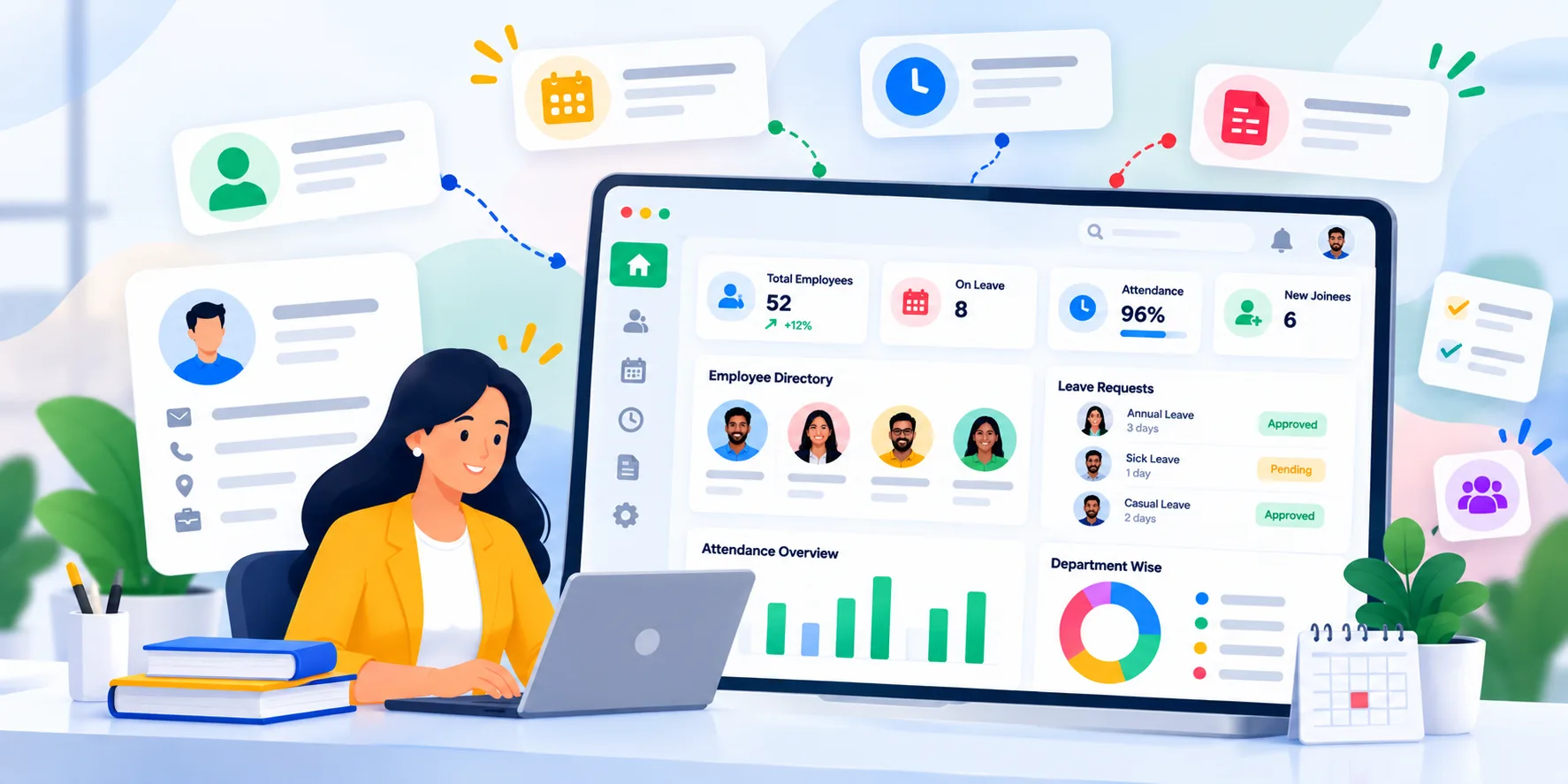
Zoho People provides a platform for organising employee information and supporting everyday human resource processes. With suitable configuration, businesses can establish more consistent workflows and make routine HR administration easier to manage.
Small businesses often begin with simple methods for managing employee information. A spreadsheet may contain employee details, email may be used for leave requests, and attendance records may be maintained separately.
Although these methods can work initially, they become harder to maintain when the workforce expands or several managers need access to the same information.
Common challenges include:
These problems can create unnecessary administrative work and make it harder to maintain consistent HR practices.
A structured HR management system helps businesses establish standard processes, define responsibilities, and make employee information easier to access for authorised users.
Zoho People is an HR management application designed to help businesses organise employee-related information and manage workforce processes.
Its capabilities include employee information management, leave management, attendance tracking, onboarding-related workflows, and other HR functions, depending on the available features and configuration.
For example, a growing company can use Zoho People to maintain employee profiles, establish leave policies, organise attendance records, and create workflows for handling employee requests.
Instead of relying on multiple disconnected records, the business can manage supported HR activities within a central platform.
Zoho People can also support employee self-service processes, allowing employees to access relevant information or submit requests through configured functionality. This can reduce the need for HR staff to handle every routine enquiry individually.
The application should be configured according to the organisation's policies, workforce structure, access requirements, and applicable employment regulations.
The goal is not simply to move existing paperwork online. It is to create a more consistent way of managing employee information and HR responsibilities.
Accurate employee information is an important foundation for effective HR management.
Businesses need to maintain details such as employee contact information, department, job role, reporting relationships, and other relevant employment records. When this information is stored in multiple spreadsheets, keeping it accurate and up to date can become difficult.
Zoho People helps businesses organise employee information through structured employee records. Appropriate access permissions can help ensure that information is available to authorised users according to their responsibilities.
A consistent onboarding process is equally important. When a new employee joins, HR teams may need to coordinate documentation, employee details, induction activities, and communication with the relevant departments.
Businesses can use suitable HR workflows to organise these activities and establish clearer responsibilities for the people involved.
For example, an HR team can create a standard onboarding checklist so that the necessary activities are tracked consistently for each new employee.
A well-organised process helps reduce the likelihood of missing administrative steps and gives new employees a clearer introduction to the organisation.
Businesses should also establish appropriate procedures for protecting confidential employee information and reviewing access permissions regularly.
Leave and attendance administration can become time-consuming when employees and managers rely on informal communication.
Zoho People supports leave management and attendance-related processes, helping businesses organise employee requests and maintain relevant records.
For example, an employee can submit a leave request through the configured system, after which the appropriate manager can review and approve or reject it according to company policy.
HR staff can then review relevant leave information without collecting updates manually from different departments.
Attendance tracking can also help businesses maintain records of employee attendance using the supported methods configured for their organisation.
However, attendance requirements differ across businesses. Some organisations use fixed working hours, while others have shifts, flexible schedules, remote employees, or location-specific policies.
The HR system should reflect these operational requirements rather than forcing every employee into the same workflow.
Before implementation, define leave policies, approval responsibilities, working schedules, attendance rules, and exception-handling procedures.
Clear policies are essential because software can help enforce an established process, but it cannot resolve disagreements or ambiguities in company policy on its own.
HR teams often spend time handling repetitive activities such as routing requests, notifying managers, updating records, and following up on pending approvals.
Zoho People provides workflow capabilities that can help businesses standardise suitable HR processes. Depending on the configured features, organisations can automate selected actions and notifications according to defined conditions.
Consider a leave approval process in which an employee submits a request that must be reviewed by a manager. A configured workflow can help route the request to the appropriate person and notify relevant users when an action is required.
Similar approaches can help organise selected onboarding activities and other routine administrative processes.
Automation is most useful when the underlying process is clearly defined. If responsibilities are unclear or approval rules frequently change, automating the workflow without reviewing those issues may create additional confusion.
A practical approach is to identify the HR activities that consume the most time, document the existing steps, and select a small number of improvements to implement first.
After testing the workflows, HR teams can review whether they reduce manual effort and make responsibilities clearer.
Human oversight should remain available for exceptional cases, sensitive employee matters, and decisions that require individual judgement.
HR managers need reliable information to understand workforce activity and identify administrative issues that require attention.
Zoho People offers reporting capabilities that can help businesses review relevant employee and HR information, subject to the available features and configuration.
Depending on their requirements, organisations may review indicators such as:
These insights can help managers identify recurring problems and improve their internal processes.
For example, if leave requests frequently remain pending, HR can investigate whether approval responsibilities are unclear or managers need a more consistent review process.
Similarly, recurring attendance discrepancies may indicate that employees need clearer instructions or that existing attendance procedures require adjustment.
Reports should be interpreted carefully and used to improve processes rather than simply monitor employees without context. Workforce information can be sensitive, so access should be limited to appropriate users.
Businesses should also ensure that their use of employee data follows applicable privacy and employment requirements.
A successful HR implementation begins with understanding how the business currently manages its workforce.
Simply importing employee records into a new application may not address inconsistent policies, unclear approval responsibilities, or repetitive administrative work.
A practical implementation can follow five steps.
Review existing HR processes. Document how employee records, onboarding, leave, attendance, and approvals are currently managed.
Define company policies. Confirm the rules for leave, attendance, working schedules, approvals, and employee access before configuring the system.
Prepare employee data. Review existing records, correct inconsistencies, and determine which information needs to be migrated.
Configure workflows and permissions. Set up the relevant HR processes, approval rules, notifications, and access permissions according to the organisation's requirements.
Train employees and review adoption. Help employees understand how to submit requests and access relevant information. Review workflow completion, record accuracy, and recurring administrative issues after launch.
Some businesses may also need connections between HR and other business applications. These requirements should be evaluated according to the information that needs to be shared and the integration capabilities available.
An implementation partner can help assess requirements, configure the application, organise data migration, and establish workflows that suit the organisation.
At Zovysys, we help businesses evaluate their operational requirements and implement suitable Zoho solutions. The objective is to create practical HR workflows that support employees and HR teams while fitting the organisation's policies.
Explore our Zoho services to learn how Zoho applications can support different areas of your business.
A well-organised HR process can help your business manage employee information more consistently and reduce the effort involved in routine administration. If you are considering Zoho People for your organisation, schedule a consultation with our team to discuss your requirements and explore an implementation approach suited to your business.
Discover how Zoho CRM helps businesses organise leads, manage sales pipelines, automate follow-ups, and build a more consistent sales process.
Learn how Zoho Books helps small businesses manage invoices, track expenses, monitor payments, and organise their financial operations.
Learn how Zoho Desk helps businesses organise support tickets, manage customer enquiries, automate routine tasks, and improve service workflows.
Talk to our Zoho experts and get guidance tailored to your business goals. No obligation, just a conversation.
Talk to Our Zoho ExpertsWe use cookies to analyse site usage. See our Privacy Policy.