Zoho CRM8 min read
How Zoho CRM Streamlines Your Sales Process
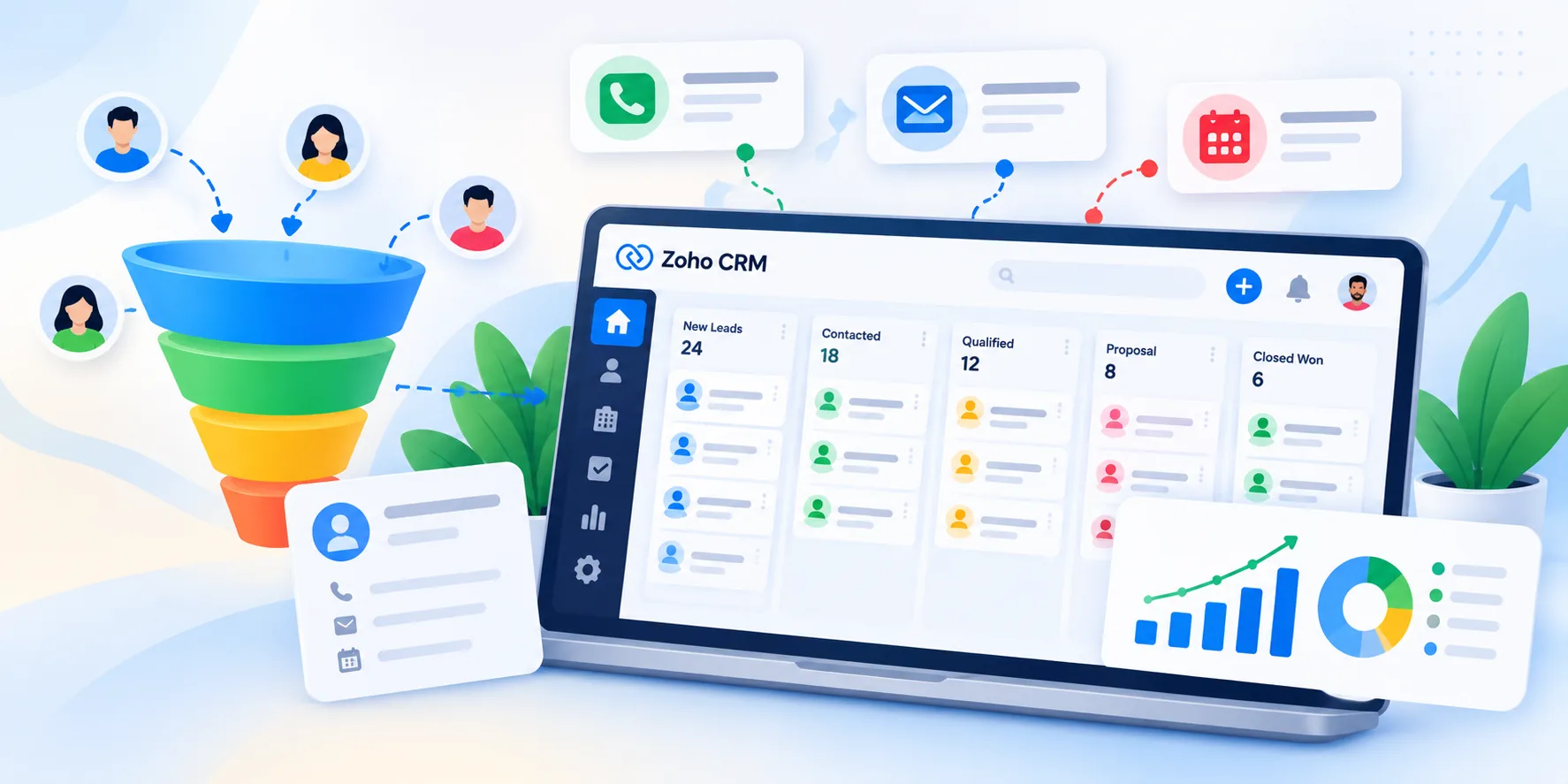
Discover how Zoho CRM helps businesses organise leads, manage sales pipelines, automate follow-ups, and build a more consistent sales process.
Praba
Oct 17, 2026
Managing business finances involves more than recording sales and receiving payments. Business owners need to create invoices, track expenses, monitor outstanding payments, and understand their financial position while keeping everyday operations running smoothly.
When these activities depend on spreadsheets, paper records, and separate applications, financial information can become difficult to maintain. Important invoices may go unpaid, expenses may be recorded late, and preparing financial reports may require additional manual work.
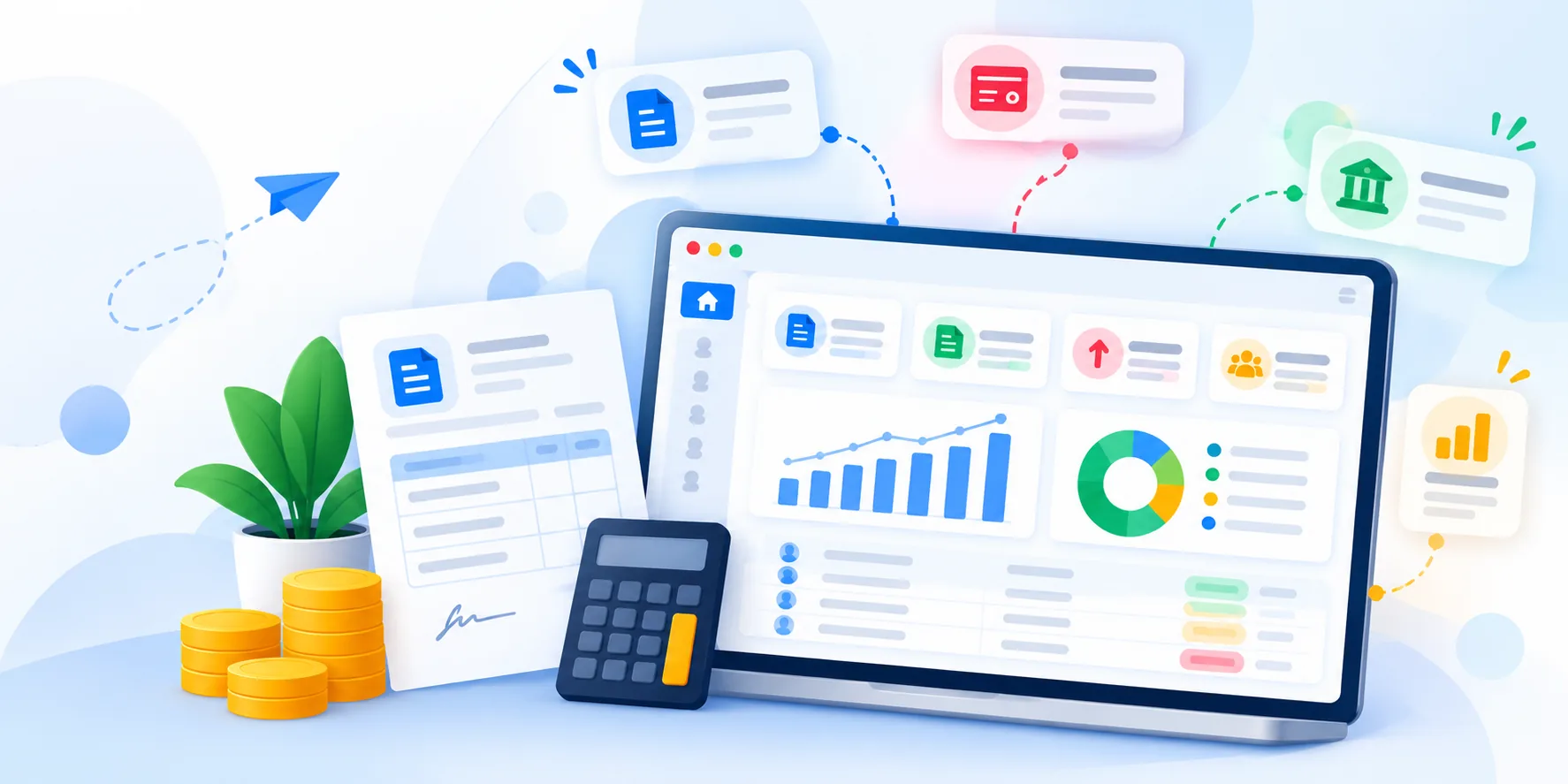
Zoho Books offers a way to organise many of these accounting activities in one place. By establishing consistent financial workflows, small businesses can improve their visibility into transactions and spend less time managing scattered records.
Many small businesses begin by tracking income and expenses through spreadsheets or basic accounting tools. This approach may be sufficient initially, but it can become harder to maintain as the number of customers, transactions, and business expenses increases.
Several challenges commonly appear as a business grows.
These problems can affect decision-making even when a business is generating sales. Revenue alone does not show how much money has been collected, which expenses are outstanding, or whether sufficient cash is available for upcoming obligations.
A structured accounting system helps businesses maintain more consistent records and understand their financial position more clearly.
Zoho Books is an online accounting application designed to help businesses manage their financial operations. It supports activities such as invoicing, expense tracking, accounts receivable and payable, banking-related workflows, and financial reporting.
Instead of maintaining separate records for every transaction, businesses can use Zoho Books to organise financial information within a central system.
For example, a consulting company can create customer invoices, record business expenses, track payments, and review financial reports. A product-based business can use the application to manage billing and other supported accounting workflows alongside its broader operational systems.
The exact capabilities available depend on the applicable subscription, regional requirements, and configuration.
Zoho Books is not simply a replacement for spreadsheets. Its value comes from establishing consistent processes for recording transactions, monitoring payments, and reviewing financial information.
Businesses should evaluate their accounting requirements, transaction volumes, tax obligations, and integration needs before selecting a suitable setup.
Invoicing is one of the most important financial activities for a service-based or product-based business. When invoices are prepared manually, teams may spend unnecessary time entering customer details, calculating amounts, and checking payment status.
Zoho Books helps businesses create and manage customer invoices through a structured workflow. Teams can maintain customer records, record invoice details, monitor payment status, and organise outstanding receivables.
For example, consider a consulting company that bills several customers every month. Without a consistent system, employees might maintain one spreadsheet for invoices, another for payments, and a separate list of overdue balances.
With Zoho Books, the company can maintain invoice records and review which invoices have been paid, remain outstanding, or require follow-up.
The application also supports recurring invoices for suitable billing arrangements. This can help businesses manage predictable, repeated billing without preparing every invoice from scratch.
Businesses can establish a regular process for reviewing outstanding invoices and contacting customers when payments are due.
However, invoicing software cannot guarantee that customers will pay on time. Clear payment terms, accurate billing information, and consistent follow-up remain important parts of an effective collection process.
Revenue tells only part of the story of a business. Owners also need to understand what they spend, which payments they must make, and how much money is available to meet upcoming obligations.
Zoho Books supports expense recording and management, helping businesses organise costs associated with their operations. Depending on the configured workflow, businesses can also manage supplier bills and monitor amounts payable.
For example, a small agency might incur expenses for software subscriptions, travel, office supplies, contractors, and other operating costs. Recording these transactions consistently makes it easier to review spending patterns and prepare financial reports.
Banking-related features and supported bank connections can also help businesses organise transaction information and perform reconciliation, subject to regional availability and account support.
Cash flow deserves particular attention. A business may record strong sales while still experiencing cash shortages because customers have not paid their invoices or significant expenses are due.
By reviewing outstanding receivables, upcoming payables, and available financial information, business owners can make more informed decisions about spending and payment priorities.
Zoho Books can support this process, but accurate records and regular financial reviews are essential. Businesses should also distinguish accounting profit from available cash because they measure different aspects of financial performance.
Manual financial administration can consume time that business owners and finance teams could otherwise spend on higher-value activities.
Zoho Books offers automation capabilities that can help reduce repetitive work. Depending on the configuration and applicable features, businesses can use recurring transactions, workflow rules, payment reminders, and other supported automation options to standardise routine activities.
Consider a business that sends invoices to customers on a recurring schedule. Setting up recurring invoices for eligible arrangements can reduce the need to create each invoice manually.
Similarly, payment reminders can support a more consistent follow-up process for outstanding invoices. Workflow rules may also help trigger appropriate actions when specified conditions are met.
The best approach is to start with tasks that are repetitive, predictable, and easy to define.
Before implementing automation, businesses should review their billing policies, approval requirements, and customer communication preferences. Automated processes must reflect the actual business workflow and should be tested before they are relied upon.
Automation should also preserve appropriate human oversight. Unusual transactions, disputed invoices, tax questions, and significant financial decisions may require individual review.
Financial reports help business owners understand how their organisation is performing and identify areas that need attention.
Zoho Books provides financial reporting capabilities that can help businesses review information such as income, expenses, receivables, payables, and other accounting indicators.
Useful reporting questions include:
These reports can help owners identify patterns and make more informed operational decisions.
For example, a business that notices increasing expenses can review its spending categories to understand which costs have changed. A company with growing outstanding receivables can examine its payment terms and collection procedures.
The quality of financial reporting depends on the accuracy and completeness of the underlying records. Transactions must be recorded consistently, and bank accounts and other relevant balances should be reconciled appropriately.
Reports should support regular financial reviews rather than being generated only when a tax filing or major business decision is approaching.
Businesses should also work with qualified accounting or tax professionals when interpreting complex financial matters or determining their compliance obligations.
Selecting accounting software is only the beginning. Businesses also need to configure the system around their existing financial processes and ensure that the information it contains is reliable.
A practical implementation can follow five steps.
Review your accounting requirements. Identify how your business currently manages invoicing, expenses, supplier payments, banking, and financial reporting.
Configure your organisation. Set up the relevant company details, financial preferences, customer records, tax settings, and other required information. Verify that the configuration reflects applicable local requirements.
Prepare and migrate existing data. Review customer information, outstanding invoices, balances, and other records before importing them. Validate the migrated information to identify missing or inconsistent data.
Establish financial workflows. Define how invoices are created, expenses are recorded, payments are tracked, and financial transactions are reviewed. Introduce automation where it provides a clear operational benefit.
Train users and review reports. Ensure that employees understand their responsibilities and know how to maintain accurate records. Review the system regularly to identify process gaps and improve consistency.
Some businesses may also require connections between accounting, CRM, inventory, or other operational applications. Zoho Books can work with supported Zoho applications and other integrations, depending on the specific requirements and available functionality.
For example, connecting relevant sales and accounting workflows can help reduce repeated data entry and improve coordination between teams. Such integrations should be evaluated carefully to ensure that information flows correctly and financial records remain consistent.
An implementation partner can help assess these requirements, configure the application, plan data migration, and establish workflows that suit the organisation.
At Zovysys, we help businesses evaluate their operational needs and implement appropriate Zoho solutions. The objective is to build a practical financial management process that supports the way the business operates.
Explore our Zoho Books services to learn how implementation and configuration can support your accounting requirements.
Organising your accounting processes can help your business maintain more reliable financial records and make better-informed decisions. If you are considering Zoho Books for your organisation, schedule a consultation with our team to discuss your requirements and explore a suitable implementation approach.
Discover how Zoho CRM helps businesses organise leads, manage sales pipelines, automate follow-ups, and build a more consistent sales process.

Learn how Zoho Desk helps businesses organise support tickets, manage customer enquiries, automate routine tasks, and improve service workflows.

Discover how Zoho People helps businesses organise employee records, manage leave, streamline HR processes, and improve workforce administration.
Talk to our Zoho experts and get guidance tailored to your business goals. No obligation, just a conversation.
Talk to Our Zoho ExpertsWe use cookies to analyse site usage. See our Privacy Policy.